
ECU Project I4
A virtual reality platform for East Carolina University's College of Education, helping school leaders practice observing math and science classrooms and talking with teachers about instruction.
- Client
- East Carolina University, College of Education
- Program
- U.S. Department of Education SEED grant, $9.7 million
- Years
- 2019–2021, with follow-on AR research
- Platform
- Oculus Quest (standalone VR), Unity

The project
Project I4: Innovate, Inquire, Iterate and Impact was a multi-year effort led by ECU's College of Education to improve equitable math and science outcomes. Cohorts of school leaders took part in professional learning in person and online, with coaching and virtual reality support. The goals: use evidence-based observation practices in math and science classrooms, revitalize principals' conversations with teachers about instruction, and re-imagine professional learning. ECU describes it as the largest grant the College of Education has received.
Spark Plug Games was the project's virtual reality development partner, working alongside the Institute for Educational Leadership and the Wisconsin Center for Education Products and Services. You can read more on ECU's Project I4 page.
What we built
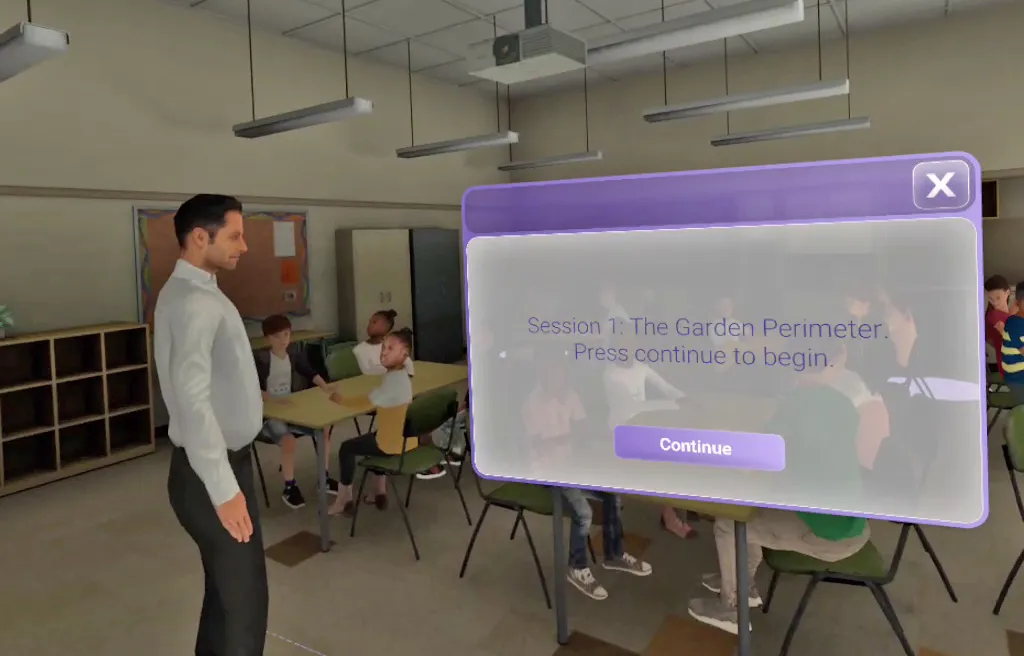
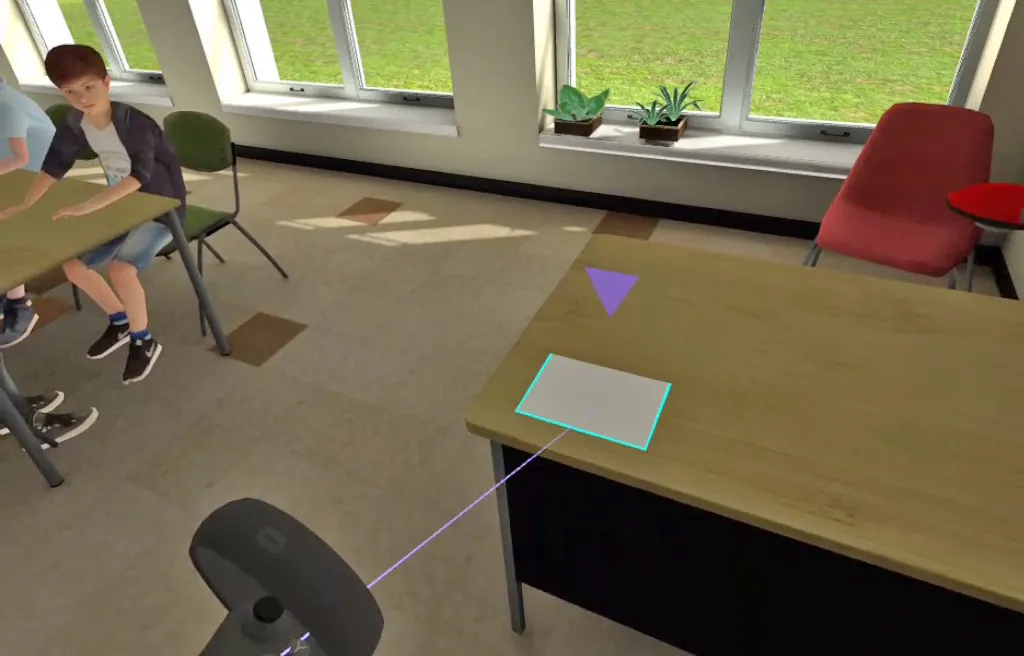
- Realistic virtual classrooms. Fully furnished rooms with a teacher and a full class of animated students, built to near-photorealistic quality while holding the Quest's 72 fps for comfort.
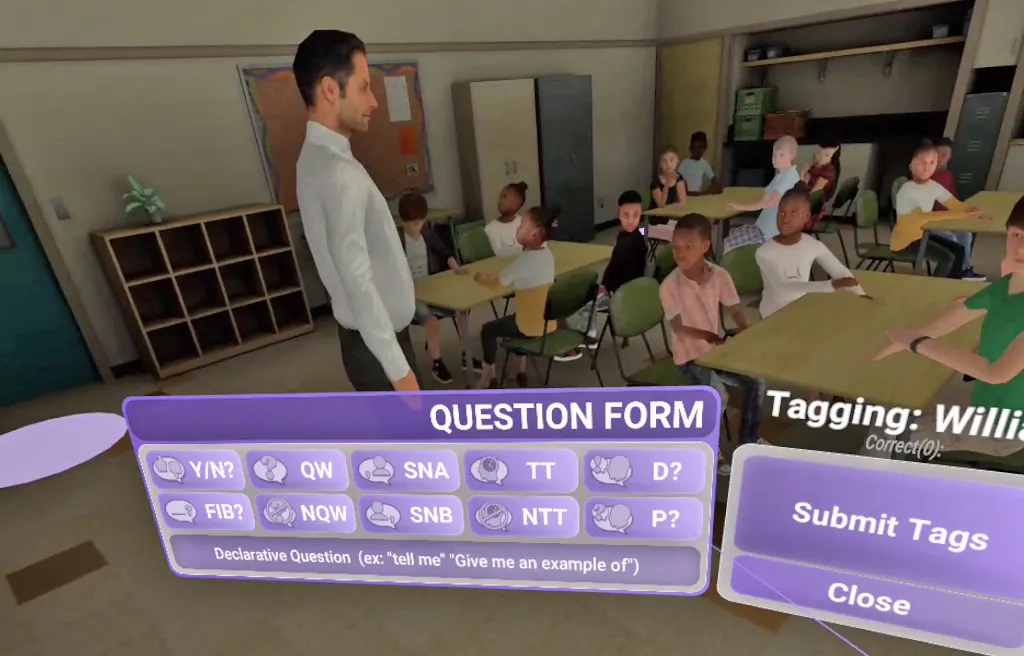
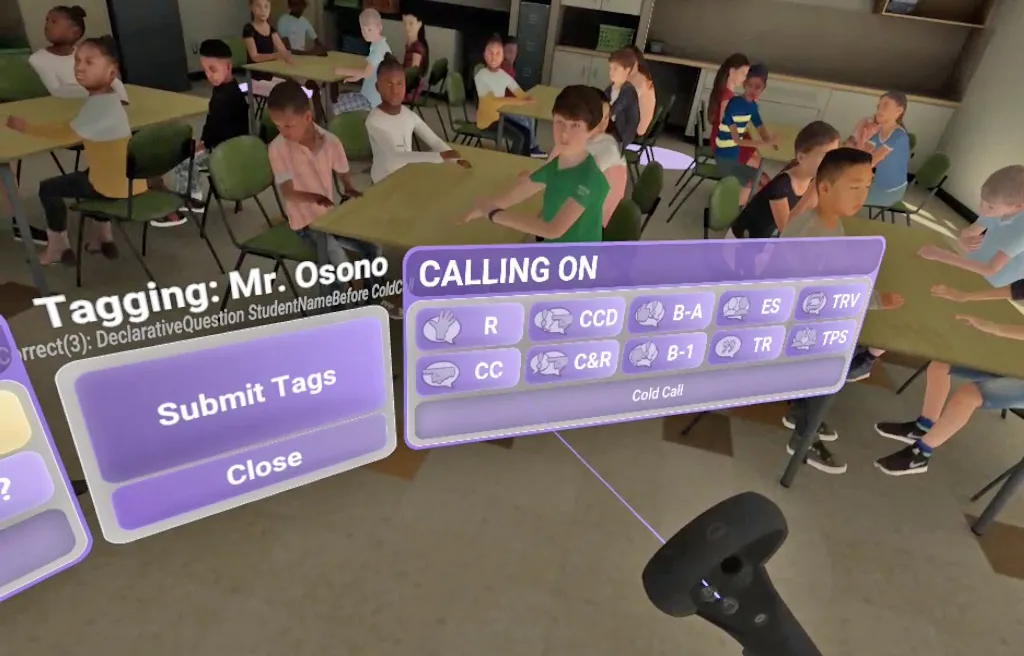
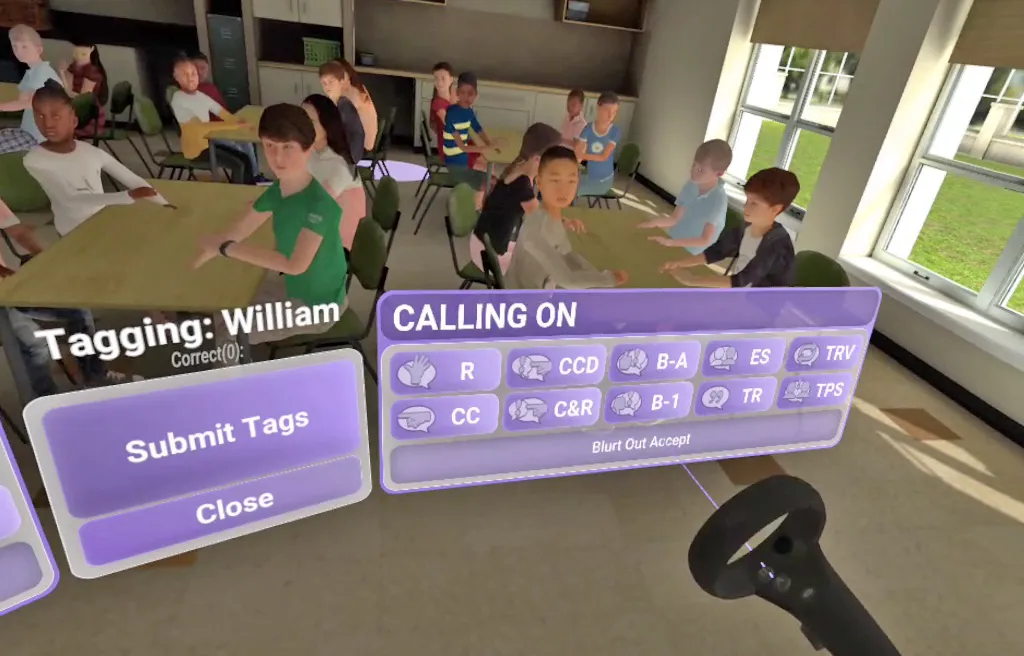
- Observation sessions. School leaders watch a lesson unfold and tag what they see in real time — how the teacher calls on students, the form of each question — using codes drawn from the project's observation framework.
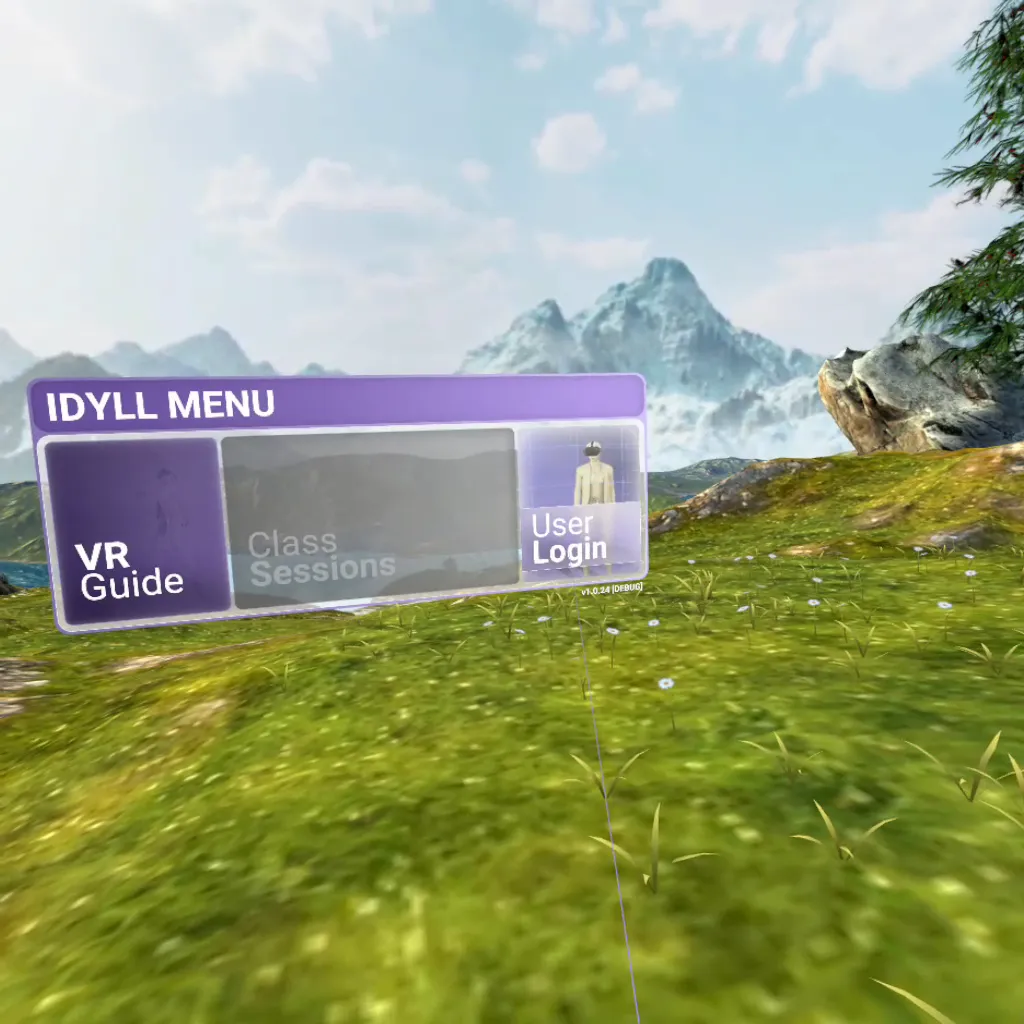
- Onboarding for first-time VR users. Our users weren't gamers, and most had never worn a headset. A calm outdoor space, "The Idyll," and an in-headset VR Guide teach the controls before any session begins.
- Data-driven content. Dialogue and session content are authored as data, outside the app, so the education team can change scenarios without a new build.
- Analytics that work offline. Session data is stored on the headset and uploaded when a connection is available, supporting after-action review and research.
- Administration tools. User accounts, class sessions and deployment support for running cohorts in the field.
How we approached it
Before writing production code, the team evaluated more than six hardware platforms for durability, cost and fidelity. Early prototypes targeted the Oculus Go; when the Oculus Quest launched in May 2019, our performance tests showed it hit the right balance of power, portability and price, and we moved the project to it. We benchmarked Unity's rendering pipelines on device, built a library of tested, reusable modules for fast iteration, and kept comfort with the hardware and controls as a core design requirement from prototype to prototype. We wrote about that decision in Evaluation of Mobile VR Solutions.
What came next
VR is excellent for focused practice, but it separates the observer from the real classroom. That led to follow-on research into augmented reality glasses that could support live observations without leaving the room — see Virtually Returning to the Real World.